Standard Descriptor 4.1
Identify strategies to support inclusive student participation and engagement in classroom activities.
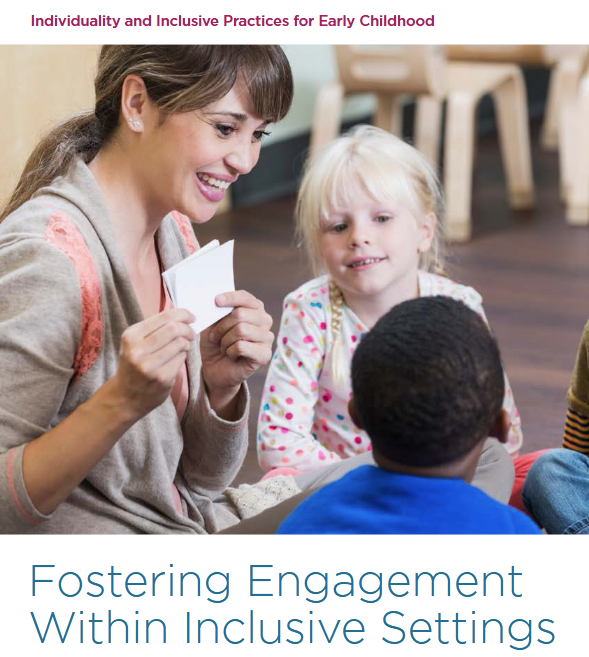
Rausch, A., Joseph, J., Strain, P. S., & Steed, E. A. (2021).
Fostering engagement within inclusive settings: The role of the physical-social-temporal environment in early childhood settings. YC Young Children, 76(4), 16–21. https://doi.org/101.117.59.68
Topic 2: Social & cultural contexts
Initially, I lacked confidence in identifying strategies to support inclusive participation and engagement. Through my engagement with Boyd et al. (2021) and Churchill (2025), I developed a deeper understanding of how children’s social and cultural contexts, relationships and individual characteristics influence their learning. I now recognise the importance of viewing children as active and capable learners whose interests and experiences influence their participation. Rausch et al. (2021) further developed my awareness of how positive peer relationships and supportive social environments foster inclusion and belonging. I intend to apply this learning by listening to children, using open-ended questions to extend their thinking, encouraging collaborative play and modelling positive social interactions. These strategies will help me create inclusive opportunities for children to share ideas, build relationships and engage meaningfully in learning.
Standard Descriptor 4.3
Demonstrate knowledge of practical approaches to manage challenging behaviour.
Resource name
Early childhood guidance program. (2024). Early Childhood
Education and Care. https://earlychildhood.qld.gov.au/grants-and-funding/disability-and-inclusion-support-programs/early-childhood-guidance-program
Topic 12: Environments, identity and belonging

During my placement, I observed my supervising teacher using a disciplinary approach to manage challenging behaviour. Exploring Arthur’s (2025) discussion of the guidance approach challenged my initial understanding of managing challenging behaviour. I learnt that positive relationships, modelling prosocial behaviours and establishing clear expectations can help children develop social competence and self-regulation. The Queensland Government’s Early Childhood Guidance Program (2024) will support my future practice by providing professional learning and practical strategies for positively guiding children’s behaviour. It reinforces the importance of building respectful relationships, maintaining children’s dignity and considering their individual developmental needs. I can apply this knowledge by establishing clear expectations, modelling positive interactions and helping children develop strategies to manage their emotions and resolve conflicts. This will support me to respond to challenging behaviour in ways that promote children's self-regulation and positive relationships.
Standard Descriptor 4.4
Describe strategies that support students’ wellbeing and safety working within school and/or system, curriculum and legislative requirements.
Authority, N. E. R. (2024, June 26). Eight practical tips to
support children’s wellbeing. Education.Nsw.Gov.Au. https://education.nsw.gov.au/early-childhood-education/leadership/news/eight-practical-tips-to-support-children-s-wellbeing
Topic 4: professional advocacy
My initial understanding of supporting children’s wellbeing and safety focused on how intentionally planned learning programs and environments can promote children’s wellbeing and protect them from harm. As I explored this topic further, I began to recognise the broader professional role of educators, particularly the importance of advocacy. Page and Tayler (2016) explain that educators have a responsibility to advocate for children by speaking, listening and acting in their best interests to influence decisions and create positive change. Similarly, Mevawalla and Archer (2022) highlight that advocacy involves raising awareness of barriers that may affect children’s rights, inclusion and wellbeing. The NSW Department of Education (2024) complements this understanding by providing practical strategies educators can use to promote children’s wellbeing. This resource will inform my practice by strengthening my ability to recognise children’s individual wellbeing needs and implement intentional strategies to support them. I now recognise that professional advocacy also involves identifying barriers that may affect children's wellbeing, safety and participation, and taking action to address these concerns. As a preservice teacher, I have a responsibility to raise concerns, communicate children's needs and work collaboratively with colleagues and families to ensure children's rights and best interests remain central to decision-making.
Create Your Own Website With Webador