Standard Descriptor 6.1
Demonstrate an understanding of the role of the Australian Professional Standards for Teachers in identifying professional learning needs.
Australian Institute for Teaching and School Leadership
(AITSL). (2025). Identifying professional learning needs. Aitsl. https://www.aitsl.edu.au/resources/identifying-professional-learning-needs
Topic 6: Professional Identity
I had previously understood reflection to be the primary way to identify my professional learning needs as an educator. Further exploration of the Australian Professional Standards for Teachers (APST) broadened my understanding of how the three professional domains: Professional Knowledge, Professional Practice and Professional Engagement, provide a framework for identifying areas for development. Ewing et al. (2019) highlight the importance of continually evaluating teaching practice, while Ailwood et al. (2016) emphasise practitioner inquiry and collaborative reflection within professional communities. The Australian Institute for Teaching and School Leadership (AITSL, 2025) further demonstrates how the APST can guide professional learning by helping educators recognise areas for improvement and establish relevant learning goals. I can apply this resource in my future practice to evaluate my capabilities, identify learning needs and guide my ongoing professional development.
Standard Descriptor 6.2
Understand the relevant and appropriate sources of professional learning for teachers.
Victorian Government. (2024). Resources to support your
professional learning and practice. https://www.vic.gov.au/professional-learning-practice-resources
Topic 3: professional learning
I had not previously given much consideration to the range of professional learning sources available to educators. Whitton et al. (2021) expanded my understanding of the importance of ongoing professional learning in strengthening teaching knowledge and practice. They identify various opportunities such as professional reading, mentoring, collaboration with colleagues, professional associations and professional development sessions. Additionally, the authors emphasise that professional learning should address educators' individual needs and lead to intentional improvements to practice. The Victorian Government (2024) resource, Resources to support your professional learning and practice, provides further opportunities to explore relevant professional learning resources. I now recognise that professional learning is not an individual responsibility but is strengthened through participation in professional learning communities. Sharing experiences, discussing challenges and reflecting on different perspectives allows educators to develop their knowledge collaboratively and identify opportunities to improve their practice. As a preservice teacher, I aim to actively participate in these professional conversations and contribute to a culture of ongoing learning within early childhood settings.
Standard Descriptor 6.4
Demonstrate an understanding of the rationale for continued professional learning and the implications for improved student learning.
Early Childhood Australia. (2026). Professional learning guide
evidence-based tools and resources that inspire quality. https://www.earlychildhoodaustralia.org.au/wp-content/uploads/2026/03/ECA-Professional-learning-guide-2025-digital-with-links.pdf
Topic 3: Professional learning
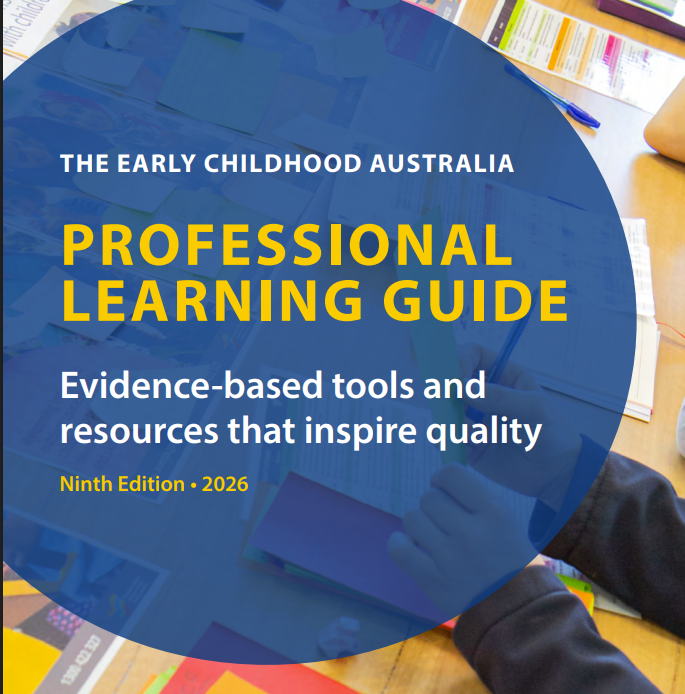
I understood that professional learning could support children’s learning outcomes, but I had not previously recognised the extent of its impact. Egert et al. (2018) highlighted how ongoing professional development can improve the quality of early childhood education by strengthening educators’ knowledge and teaching practices, contributing to positive learning and developmental outcomes for children. This expanded my understanding of the importance of continually developing my professional knowledge and skills to improve children’s learning experiences. The Early Childhood Australia (2026) Professional Learning Guide: Evidence-Based Tools and Resources That Inspire Quality provides a variety of learning opportunities, including online learning, events and publications. I can use this guide throughout my teaching career to access relevant professional learning, strengthen my practice and support positive learning and developmental outcomes for children.
Create Your Own Website With Webador